Fragrance Oil Calculator
Work out how much fragrance oil to add, for any wax, at any load.
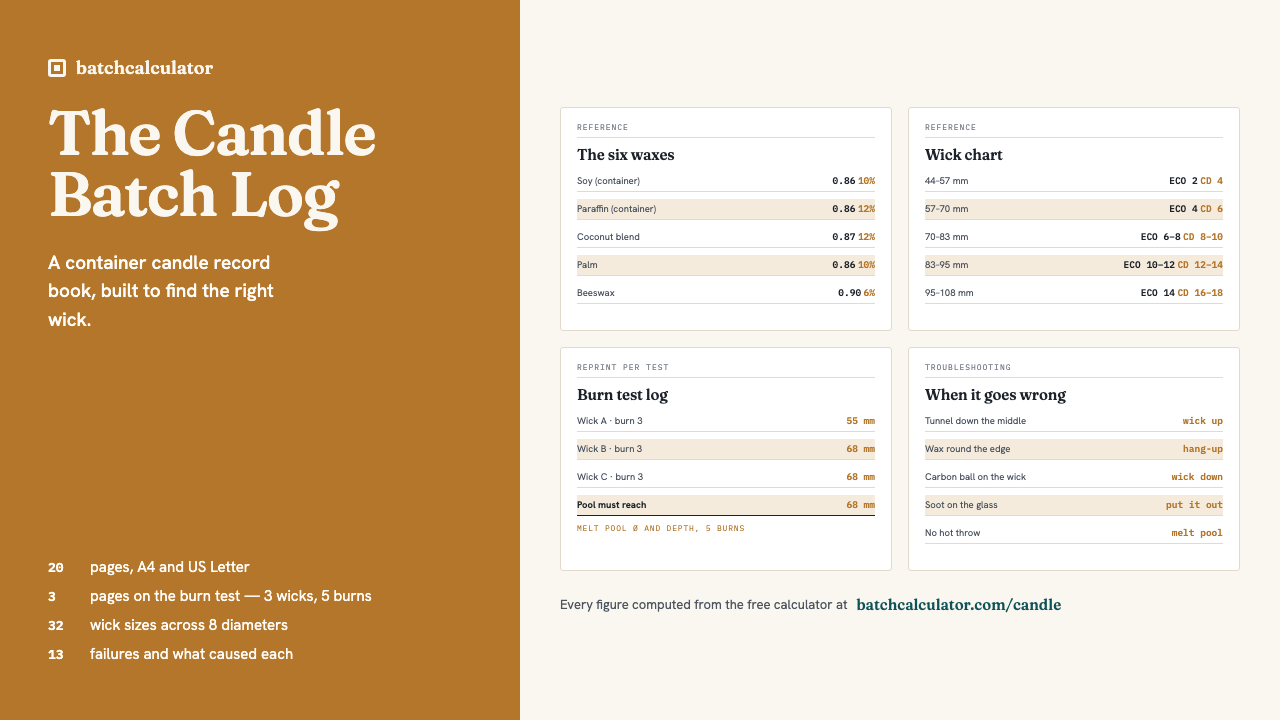 The Candle Batch Log Wax, fragrance %, wick, vessel and burn notes for every pour, with a cost column that adds up. $9 Get it
Print the numbers you keep looking up
One printable page, wax, fragrance load, wick sizing and pour temperatures. Free.
Get your free download
Candle Making Quick Reference
How this is worked out
Fragrance load is a ratio by weight, never by volume, oils differ in density, so measuring by milliliters introduces an error before you start. The only complication is which weight the percentage refers to. Quoted as a percentage of wax, the oil is added on top of the wax and the finished candle weighs more than the wax you started with. Quoted as a percentage of the total, the oil is part of the finished weight and the wax is reduced to make room. The calculator does whichever you choose and tells you what the same batch would be called under the other convention, so you can follow a recipe without having to guess which one its author meant. Typical loads across the common waxes run about 5–12%.
Questions makers ask
How much fragrance oil per pound of wax?
Is the percentage of the wax or of the whole candle?
What is the maximum fragrance load?
What happens if I add too much fragrance oil?
Why does my candle not smell strong even at a high load?
Read before your next batch
- How much wax do I need for candles? A jar is sold by volume and wax is bought by weight, so the two numbers never match. Here is the conversion for every common container.
- Fragrance oil to wax ratio explained How much oil each wax will actually hold, why the same percentage can mean two different amounts, and what happens when you go over.
- How to calculate fragrance load Two multiplications and one thing to watch for. Here is the method, worked at every load from 6% to 10%.
- Soy vs paraffin vs beeswax: which to use Less a matter of taste than of what each wax can physically do. Here is where they genuinely differ, and where they barely do.